Unlocking the Billions: Why UK Pension Funds Are Sleeping Through the Sustainable Investment Revolution
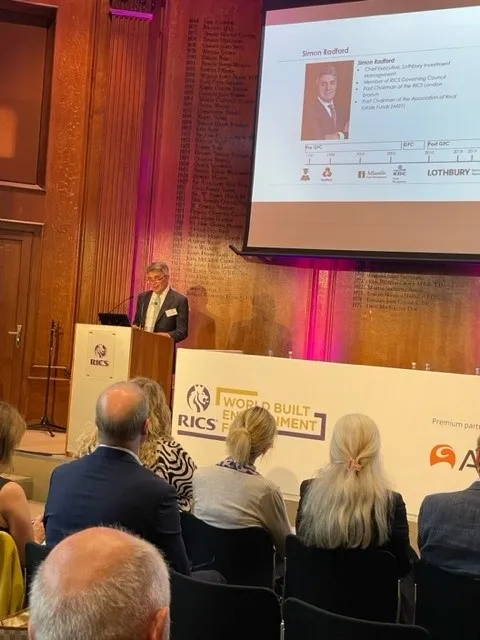
Photo: UK pension fund investment meeting boardroom sustainability, via www.rics.org
The United Kingdom's pension sector manages an estimated £2.5 trillion in assets. It is, by any measure, one of the most powerful pools of capital in the world. And yet, when one surveys the landscape of high-growth sustainable ventures—climate technology, regenerative agriculture, clean infrastructure, and social impact enterprises—pension fund participation remains conspicuously thin. The question is no longer whether responsible investment delivers returns. The evidence is mounting that it does. The question is why so much retirement capital remains on the sidelines.
A Mandate Misread
At the heart of the problem lies a persistent misreading of fiduciary duty. Many pension trustees still operate under the assumption that their legal obligation to members demands the prioritisation of short-term financial performance above all other considerations. This interpretation, however, is increasingly at odds with regulatory guidance.
The Pensions Regulator has made clear in recent years that trustees are not only permitted but expected to consider long-term risks—including climate-related financial risk—when making investment decisions. The Law Commission's landmark 2014 report on fiduciary duty reinforced this position, and subsequent guidance has only strengthened it. Yet the cultural lag within many schemes is substantial. Trustees who came of age in an era of gilt-heavy portfolios and defined-benefit certainties are not always equipped—or incentivised—to reframe their thinking around a 30-year sustainability horizon.
"There's a generational disconnect at work," notes one senior impact fund manager based in Edinburgh. "The trustees who control the largest pools of capital often have the least exposure to what responsible investment actually looks like in practice. They're not hostile to it—they're simply unfamiliar with it."
The Benchmarking Trap
If cultural inertia is the first barrier, short-term benchmarking is the second—and arguably the more structurally entrenched of the two. Most UK pension schemes measure performance against indices built around conventional equities and fixed income. Sustainable ventures, particularly early-stage climate technology companies and unlisted impact businesses, do not sit neatly within these frameworks.
The consequence is a kind of institutional myopia. Fund managers operating under quarterly or annual performance reviews face powerful disincentives to allocate capital towards investments whose value may compound over a decade rather than a quarter. The very time horizon that makes pension funds theoretically ideal investors in sustainable ventures—long-dated liabilities stretching thirty or forty years into the future—is undermined by short-cycle reporting structures that reward caution and penalise deviation from benchmark.
This is not a trivial problem. A defined contribution scheme with a 25-year runway to a member's retirement date is, in principle, perfectly positioned to absorb the short-term volatility of an early-stage green infrastructure fund in exchange for the long-term returns that responsible growth companies increasingly demonstrate. In practice, however, the scheme's investment committee is often reviewing performance against a conventional multi-asset benchmark every twelve months.
Risk Assessment in Need of an Overhaul
Perhaps the most technically complex barrier is the inadequacy of existing risk assessment frameworks when applied to sustainable and impact investments. Traditional models were designed around historical data drawn from conventional asset classes. They struggle to price in the systemic risks associated with climate change—physical risk, transition risk, stranded assets—and they are equally ill-suited to capturing the upside potential of ventures that derive competitive advantage from their environmental or social performance.
The Task Force on Climate-related Financial Disclosures (TCFD) framework has gone some way towards addressing this, and mandatory TCFD reporting for large UK pension schemes came into force in 2022. But disclosure is not the same as integration. Receiving a TCFD-aligned report and knowing how to weight its findings within a portfolio construction model are two very different capabilities. Many schemes lack the in-house expertise to bridge that gap.
Impact investment specialists argue that this is precisely where external partnerships become valuable. Rather than attempting to build bespoke sustainable investment capabilities from scratch, pension funds can engage with specialist impact investment managers who have already developed the analytical tools, deal pipelines, and sector knowledge required to evaluate responsible ventures rigorously.
What Progressive Trustees Are Doing Differently
A number of UK pension schemes are beginning to chart a more progressive course, and their early moves are instructive. The Greater Manchester Pension Fund, one of the largest local government schemes in the country, has made well-publicised commitments to responsible investment and has developed dedicated allocations to sustainable infrastructure. The Church of England Pensions Board has similarly embedded environmental and social criteria into its investment policy in ways that go well beyond tokenism.
What distinguishes these schemes is not merely a stated commitment to ESG principles—many funds now have those on paper—but a willingness to restructure governance, update benchmarks, and invest in trustee education. They have recognised that sustainable investment is not a niche ethical overlay but a strategic repositioning of the portfolio towards the sectors and business models most likely to thrive in a low-carbon, socially accountable economy.
For trustees considering a similar shift, the practical starting points are more accessible than many assume. Reviewing the scheme's Statement of Investment Principles to ensure it explicitly addresses long-term sustainability risks is a logical first step. Commissioning a climate risk audit of existing holdings—identifying exposure to stranded asset risk or supply chain vulnerability—provides the evidential foundation for a more informed conversation with investment managers.
Beyond that, engagement with the rapidly maturing market for UK-focused sustainable venture funds offers a genuine opportunity to access high-growth responsible businesses at a stage where pension capital can make a meaningful difference. The pipeline of investable sustainable enterprises in Britain is deeper than it has ever been. The capital is available. The regulatory environment is supportive. What remains is the will to act.
The Cost of Continued Inaction
It would be a mistake to frame this solely as an opportunity missed. There is also a risk accumulating. Pension schemes that remain overweight in carbon-intensive industries and underexposed to the transition economy are building long-term liabilities that their current risk models may not adequately reflect. As carbon pricing mechanisms tighten, as physical climate impacts materialise, and as consumer and regulatory pressure intensifies, the conventional portfolio is not the safe harbour it once appeared.
For the millions of UK workers whose retirement security depends on the decisions taken in pension boardrooms today, the stakes could not be higher. Responsible investment is not a concession to ideology. It is, increasingly, the most rational long-term strategy available. The question for trustees is whether they are prepared to lead—or whether they will wait until the cost of inaction becomes impossible to ignore.